We’ve got community members AuxilliaryOtter and first time guest CryptRat on to talk cooperative Magic! We go deep on the innovations found in the new TMNT Team Up product, then walk through our community’s pitches for cooperative and multiplayer modes! Co-op is still such a new and unexplored part of Magic, so there’s plenty to learn in this episode.
Cards from the TMNT Team Up co-op product
Submissions
Juliet
Instance & Sorceries
In the style of a FFXIV raid sort of event:
- 4 player co-operative Magic + 5th as a kind of “dungeon master”
- PvE against a scripted opponent with special rules, who is effectively the dungeon being cleared/monster of the week being fought
- the 4 players have specific roles to fill, Tank/Healer/DPS+DPS, with specific duties
- the extreme version of this being also a kind of jumpstart environment, where the tank can build from any 1+1 combination of 5 20-card “tank core decks”, etc, or players could bring their own custom-built deck
- scripted decks released but also guidelines for building new scripted decks to provide a challenge tailored to the players
- the goal is for the players to win, like in your average dungeon-game, but for there to be challenges to overcome along the way
- the DM has to be on-board with that, but thankfully there are DMs/GMs/MCs/STs everywhere who happily fill that kind of role, and might enjoy deckbuilding a new challenge for players to face
Mark Confidant
Open the Omenpaths
- 2 or more players perform a PvE digital run of multiple games of Magic, starting from two 30 card two color decks of vanilla or French vanilla creatures.
- Over the course of a run across the omenpaths, both classic and digital only cards are added to the decks. Permanent trinkets are collected. And cards, or even players, are Eternally altered through the course of the games.
- Some characters have bonus objectives, both secret and known, for alternate story progression or bonuses.
Existing Cards: Victory Chimes, Planequake
Custom Card: Karn, of Urza and Yawgmoth
Character
Artifacts appear more frequently in packs. Whenever you draft a noncreature artifact, it eternally becomes an artifact creature with power and toughness equal to its mana value.
Khord
Chicken Coop Draft
Silently you draft both your deck and the enemy’s deck playing chicken with how good your cards and signals are.
4 players
Drafting
- Nine 5 card “packs” per player, structured {Common, Common, Uncommon, Rare, [Wildcard]}
- Players draft without communicating. Each player drafting to create a deck.
- Whenever a player opens a pack, the pick one card from the pack to put in “the coop” before drafting as normal.
- At the end of the draft any player may choose to exchange their pool with the coop.
- Players build decks as normal, then face off agains the coop.
Playing
- Players share a pool of 30 life and have one free mulligan each.
- Players always go first, and draw a card on their first turn.
- The coop plays second, and has infinite mana.
- On its turn it plays cards from the top of its deck, until it plays a rare or mythic.
- Then the coop attacks with all creatures.
- Any additional choices the coop makes are decided by the players.
- The coop only loses when it runs out of cards and all of its creatures are dead.
Canon Cards: Brazen Cannonade, Friendly Teddy
Custom Cards:
Glistening Hen 2
Creature – Bird Rare
Flying
When you draft this card reveal it, then exchange it with a random card in the coop.
1/1
vtbassmatt
Power Tower
Players cooperatively battle an automated enemy. The twist: everyone’s pulling from the same library. Graveyards remain separate.
Prepare a deck with at least 50x(n+1) cards where n is the number of human players – so for two, that’s 150 cards. Singleton/Highlander construction encouraged but not required. All players are teammates, though this is not a 2HG variant. Remember that any powerful spells in the deck are likely to end up in your opponent’s hand!
The automaton starts with 50% extra life compared to humans, it does not pay mana costs for spells or abilities, and instead of playing land cards, cloaks all lands onto the battlefield (2/2, ward :2_:). The automaton aggressively plays its spells/artifacts/creatures as soon as it’s able, and likewise activates abilities of non-creature permanents as often as it’s able. Creatures prefer to attack, but if they have non-tap abilities, these are played aggressively. Tap abilities are played in or after combat (for instance if a creature has vigilance and a tap ability, it may go to combat and then be tapped for its ability).
The players win by knocking out the automaton. The players lose if all of them go out and the automaton is still alive.
Canon cards: [[Dwarven Lightsmith]], [[Imperial Mask]]
Custom card:
Smashing Pumpkins 2W
Sorcery
Destroy all cloaked creatures.
JamesDaltonBell
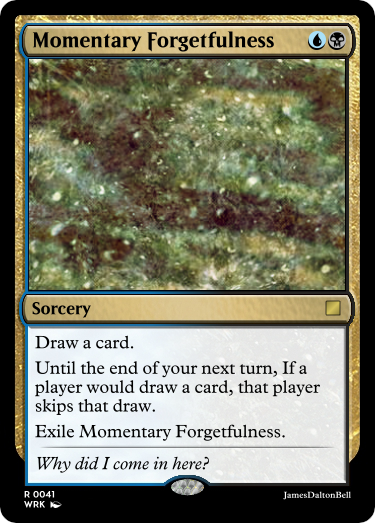
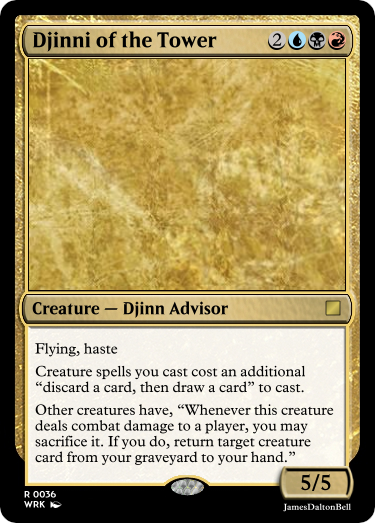
The gist is it’s Judge’s Tower, but cooperative.
Abridged description:
Judge’s Tower is a game where the point is technical precision and rules knowledge, typically played adversarially, where players are expected to manage an increasingly complicated board state, and be the last person standing without making any rules mistakes. This format can be converted from an adversarial one to a cooperative one very easily, reframing it as the players versus the rules and the shared deck (Tower) they’re playing with.
Because a last-player-standing victory condition doesn’t make sense in this context, the victory condition should be one where the players defeat the deck itself. In a game where the point is complicated rules interactions and technical precision, a winning game state would be one where each player takes a consecutive turn without taking any game actions.
We must also define a loss condition so as to not have a game that lasts forever. Players will still get out for committing rules infractions, so if ever there is only one remaining player in the game, that round is a loss, and the Tower has won.
See the attached document for examples of custom and canon cards that would be good in an environment like this, as well as the kinds of cards that should be avoided, and a more detailed description of default Judge’s Tower.
YABO
Dual duels
A set of two teammates do 1v1 matches with your opponents. You both take your turn at the same time. You have seperate heath totals of 20 each. You can only attack the player in front of you, but you can cast spells and target stuff on your teammates or opposite opponent. You get 1 free mulligan. When one player dies, both of the people in that 1v1 game are out of the game and that team gets 1 point. The other two players will continue on. A team wins once they get 3 points. A draw counts as 0 points.
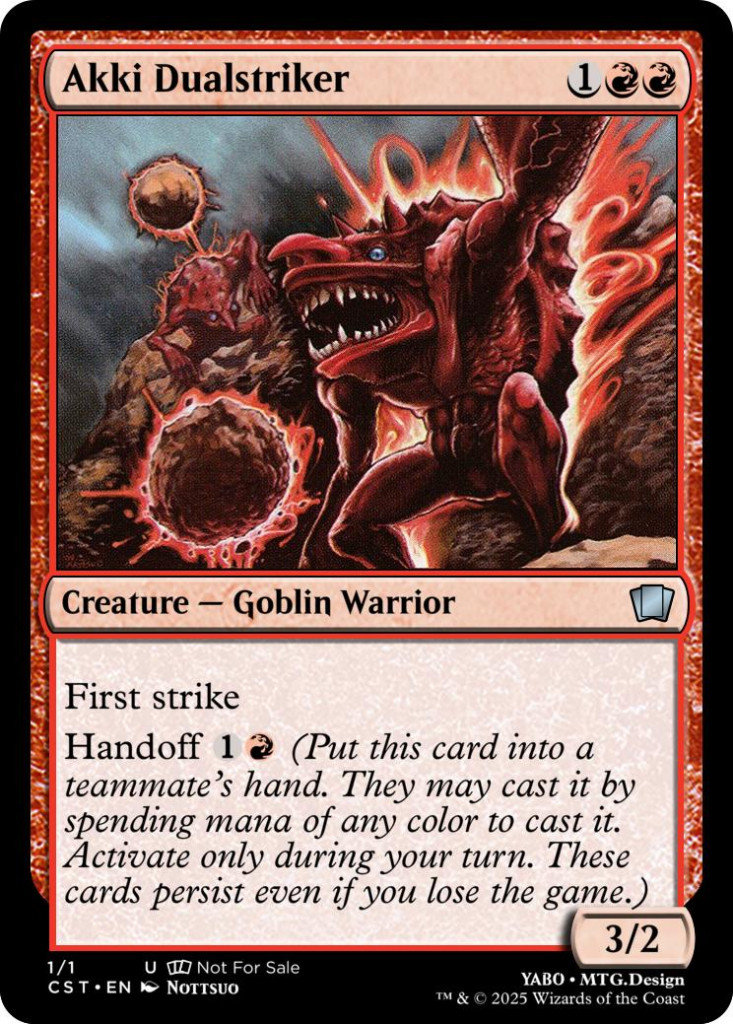
Cards in this format would care about teammates. Like Imperial Mask caring about teammates or Surge on Comparative Analysis. A custom mechanic would be Handoff as seen on Akki Dualstriker.
Canon Cards: Imperial Mask, Comparative Analysis
CryptRat
Using a number of preconstructed decks (perhaps one for each color) each player picks a deck. Starting hand size is low (3?). Each player shares the starting life total (20?) and all creatures are always goaded. Each player must cast a spell during their turn and the cards put into the decks are chosen to make hard and infrequently painful choices. (Either spells can be cast without paying mana or players are provided starting lands.) Players must try to stay alive under these conditions sequencing spells to make sure legal targets are available and that the right blockers are available for attackers that are forced to be cast.
AuxiliaryOtter 1
Co-Op Queue
The NPC draw 1 card per player face up and the players arrange them into a line. the NPC plays 1 now then will play 1 each turn from the line in order. Each turn the NPC draws a new and makes additional line that it will play 1 immediately and 1 on future turns.
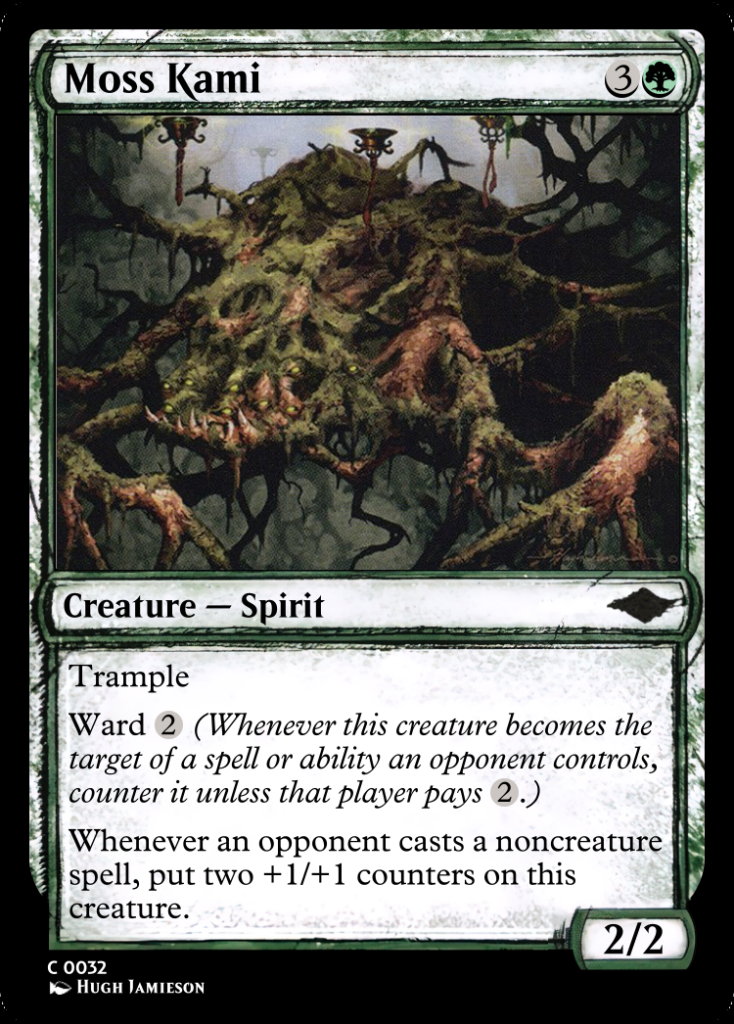
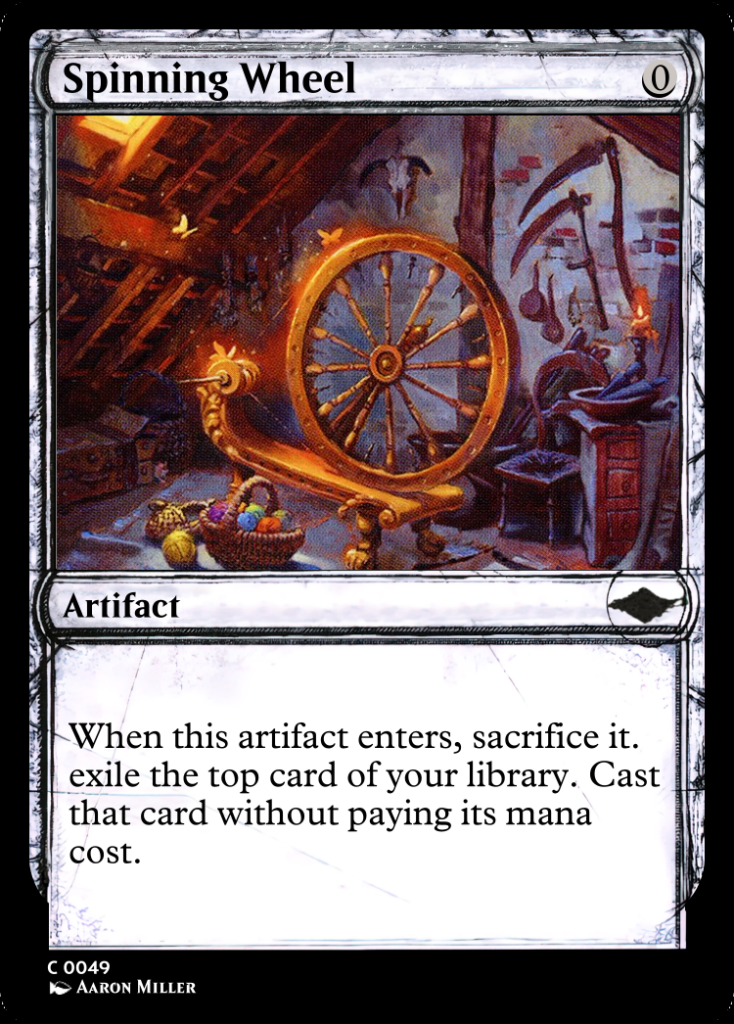
AuxiliaryOtter 2
Land Dilemma
The NPC draws 1 card for each player and adds it to its hand. For each card with MV greater than the number of lands it has when drawn the players choose whether to discard it or keep it in hand. The NPC then draws 1 land card from its land deck and repeats this process for each card discarded. Then if the NPC has lands equal to any cards in hand it casts them, the players choose the order. It does not tap its land or pay mana to play its spells. It is more a threshold of mv =< land count deal, also color does not matter if it has all green land and all black spells it still casts the cards.